The Conversation Always Starts with Cost—But That’s Rarely the Real Problem
Almost every discussion about quantity takeoff starts the same way.
Someone asks, “How accurate is the estimate?”
Someone else replies, “At this stage, it’s just a ballpark.”
And then the conversation quietly moves on.
But if you’ve worked inside an architecture or engineering firm long enough, you know something important:
early-stage estimates don’t fail because of pricing—they fail because of interpretation.
At concept stage, the problem isn’t how much something costs.
The problem is what exactly we are counting.
That distinction is subtle, but it changes everything.
What “Concept Stage” Really Looks Like in AEC Projects
On paper, concept stage sounds clean and controlled. In reality, it’s messy.
- Drawings are directional, not final
- Design intent exists in conversations, not documents
- Assumptions are shared verbally, rarely written down
- Multiple people interpret the same space differently
This is true whether you’re working on a commercial project in the USA or a consultant-led development in the UAE.
And yet, this is the stage where teams are often asked for:
- Area breakdowns
- Preliminary quantities
- Budget alignment
- Tender readiness signals
The risk is already there—but it’s hidden.
Why Pricing Is a Dangerous Focus at Concept Stage
Here’s a hard truth many firms learn the difficult way:
You can fix pricing later.
You cannot fix misunderstood scope without consequences.
At concept stage:
- Rates change
- Vendors change
- Specifications evolve
But design interpretation decisions made early tend to stick.
If a space is misunderstood early, everything downstream inherits that error:
- Quantity assumptions
- Scope narratives
- Client expectations
- Tender clarifications
By the time pricing is adjusted, the logic behind it is already flawed.
That’s why focusing on pricing accuracy too early is often a distraction.
The Real Work of Quantity Takeoff at Concept Stage
Good concept-stage quantity work isn’t about precision.
It’s about shared understanding.
The real questions engineers and architects should be answering are:
- What spaces are we actually including?
- How are we interpreting undefined areas?
- What assumptions are we making silently?
Traditional manual takeoff struggles here because it relies heavily on individual interpretation.
AI doesn’t solve this by being “smarter.”
It helps by making interpretation visible.
How AI Changes Quantity Takeoff Without Pretending to Be a QS
This is where AI is often misunderstood.
AI at concept stage is not there to:
- Lock quantities
- Predict final costs
- Replace professional judgment
Its real value is much simpler—and more powerful.
AI helps teams:
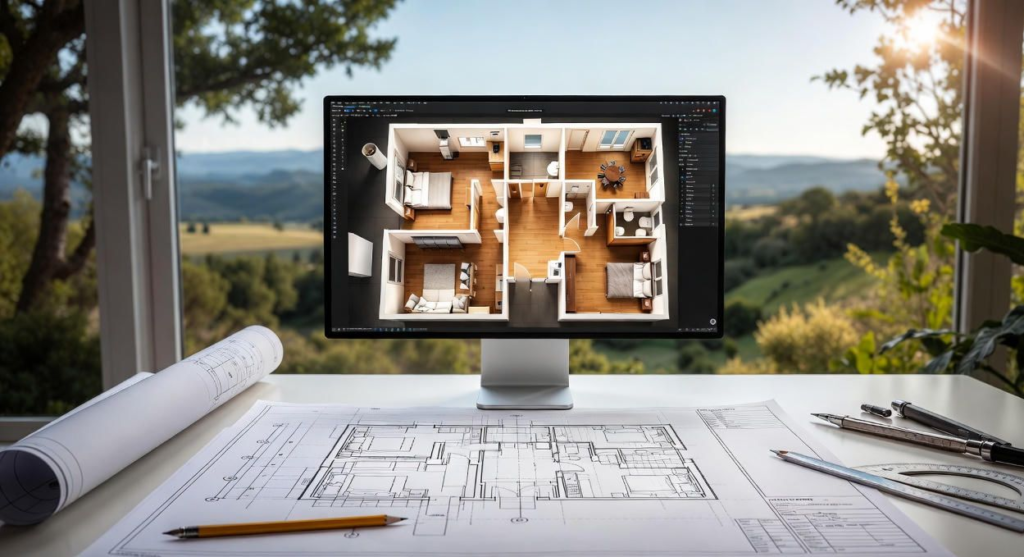
- Translate early drawings into structured geometry
- Visualize space instead of imagining it
- Expose gaps and ambiguities early
When AI assists with CAD generation or 2D-to-3D interpretation, it forces the team to confront questions they might otherwise postpone.
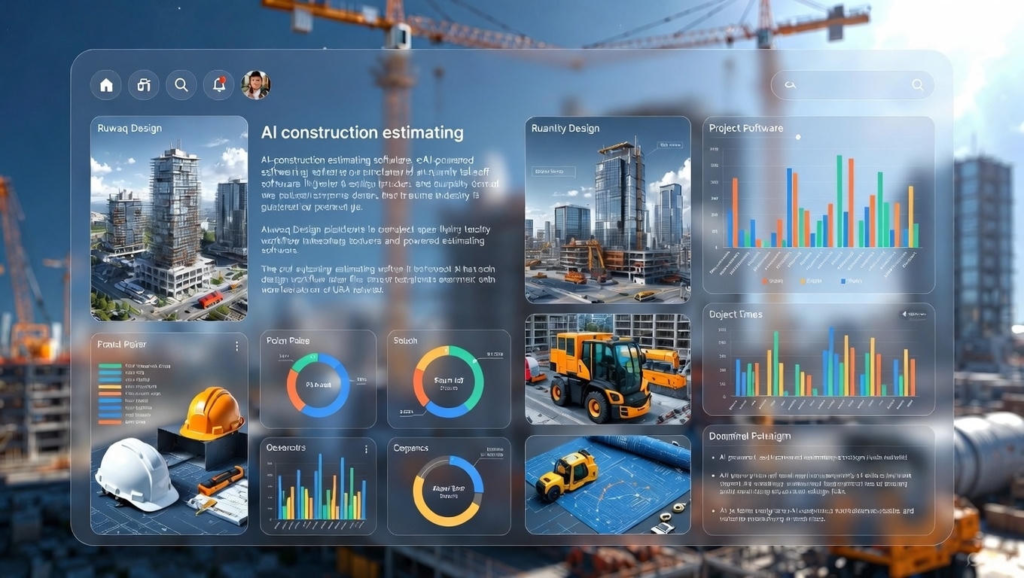
Platforms like Ruwaq Design (https://www.ruwaqdesign.com) are built around this idea—using AI to support design interpretation and quantity intelligence early, while keeping engineers firmly in control of decisions.
Manual Takeoff vs AI-Assisted Takeoff at Concept Stage
Let’s talk practically.
Manual takeoff at concept stage usually means:
- One person interprets the drawing
- Assumptions are made mentally
- Quantities are noted without full spatial clarity
- Review happens late, if at all
AI-assisted takeoff changes the flow:
- Geometry is interpreted explicitly
- Space is visualized and reviewable
- Assumptions are surfaced
- Teams discuss intent, not just numbers
This doesn’t eliminate errors—but it makes them easier to catch early.
Why Design Interpretation Is the True Risk Multiplier
In my experience, the most expensive problems don’t come from small quantity errors.
They come from:
- Spaces that were assumed but not defined
- Areas that were counted differently by different teams
- Scope elements that “everyone thought were included”
These problems originate at concept stage, not during final estimation.
AI-assisted interpretation reduces this risk by:
- Aligning everyone on the same visual logic
- Creating a shared reference point
- Making “what we mean” clearer than “what we think”
That alignment is far more valuable than early pricing accuracy.
A Necessary Reality Check for AEC Teams
This needs to be said clearly:
AI does not make concept-stage quantities correct.
It makes assumptions visible.
And visibility is what allows professionals to do their job properly.
Good firms don’t use AI to avoid responsibility.
They use it to take responsibility earlier.
When AI-Supported Quantity Takeoff Makes the Biggest Difference
From what I’ve seen, AI-assisted quantity workflows are most valuable when:
- Design is evolving quickly
- Multiple stakeholders are involved
- Tender timelines are tight
- Interpretation risk is high
In these scenarios, shared understanding matters more than exact figures.
Why This Topic Matters to the Bigger Estimating Strategy
This article exists for a reason.
It supports a larger idea:
Modern AI construction estimating starts with design intelligence, not spreadsheets.
If concept-stage interpretation is weak, no estimating tool—manual or AI—can save the project later.
That’s why design-led platforms are becoming central to how AEC firms think about estimating, tendering, and delivery.
(For the full strategic view, see our blog AI construction estimating & quantity takeoff software.)
Final Thought (From Experience, Not Theory)
If your team is debating how accurate your concept-stage quantities are, you might be asking the wrong question.
A better question is:
“Do we all mean the same thing when we look at this design?”
AI-assisted quantity takeoff doesn’t answer that question for you.
It forces you to confront it—early, clearly, and as a team.
And in AEC projects, that clarity is worth far more than premature pricing confidence.